

Buy Original Ielts Certificate Online
متابعةنظرة عامة
-
القطاعات الاعلام-السياسة
-
تم نشر الوظائف 0
-
المشاهدة 13
وصف الشركة
The 10 Scariest Things About IELTS English Certificate
Understanding the IELTS English Certificate: A Comprehensive Guide
The International English Language Testing System, typically called IELTS, is a worldwide acknowledged English language efficiency test created to assess the language skills of non-native English speakers. It is one of the most commonly accepted English language tests for higher education, migration, and professional purposes in countries where English is the primary language. This post explores the complexities of the IELTS, offering an in-depth introduction of the test format, scoring, preparation techniques, and regularly asked questions.
What is IELTS?
IELTS is a standardized test that examines candidates’ abilities in listening, reading, composing, and speaking. It is jointly handled by the British Council, IDP: IELTS Australia, and Cambridge Assessment English. The test is offered in two formats: Academic and General Training. The Academic format is appropriate for people who want to study at the undergraduate or postgraduate level in an English-speaking nation, while the General Training format is intended at those who are getting work experience, training programs, or migration.
Test Format
-
Listening (40 minutes)
- The Listening section includes 4 audio recordings, each followed by a set of concerns. The recordings vary in context, ranging from daily conversations to academic lectures.
- Test takers are needed to respond to 40 questions, which can include multiple-choice, matching, and short-answer formats.
-
Checking out (60 minutes)
- The Reading area includes three passages and 40 concerns. The passages are drawn from books, publications, newspapers, and other sources.
- For the Academic format, the passages are more complex and academic in nature, while the General Training format includes passages that are more useful and relevant to daily life.
-
Composing (60 minutes)
- The Writing area consists of 2 jobs. In Task 1 of the Academic format, candidates must explain a graph, table, chart, or diagram. In the General Training format, Task 1 involves composing a letter.
- Job 2 needs candidates to write an essay in reaction to a perspective, argument, or problem.
-
Speaking (11-14 minutes)
- The Speaking section is a face-to-face interview with an inspector. It is divided into 3 parts: an intro and interview, a long turn where the candidate discusses a provided topic, and a conversation.
- This area aims to assess prospects’ ability to interact effectively in a range of contexts.
Scoring System
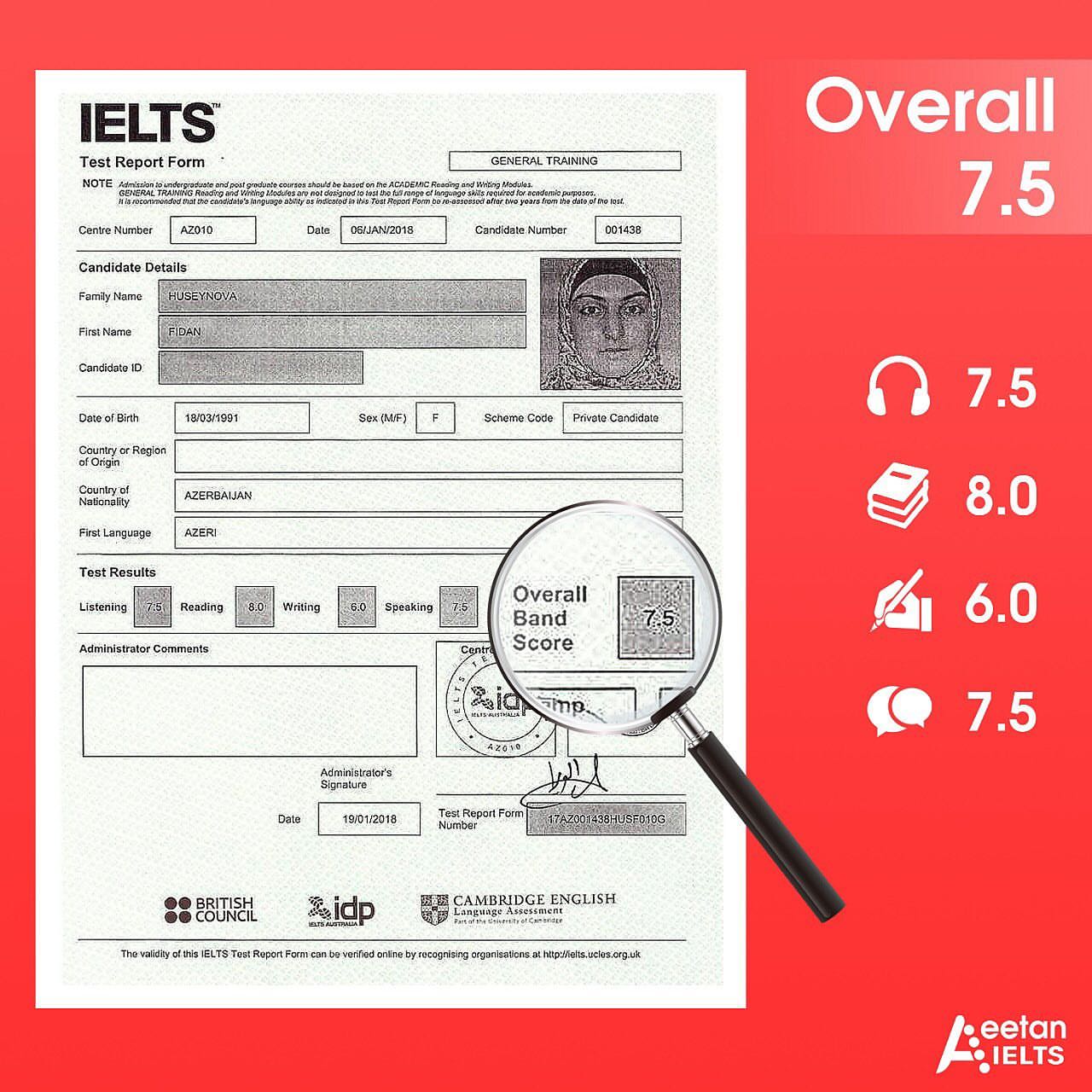
IELTS scores are reported on a scale from 0 to 9, with 9 being the greatest. Each section of the test (Listening, Reading, Writing, and Speaking) is scored separately, and the general band score is the average of these four scores. The scoring is based upon the following requirements:
- Listening and Reading: Correct responses are given one mark each, and the total score is converted to a band score.
- Composing: Tasks are evaluated based upon job achievement/response, coherence and cohesion, lexical resource, and grammatical variety and precision.
- Speaking: Performance is assessed based on fluency and coherence, lexical resource, grammatical variety and accuracy, and pronunciation.
Test Preparation
-
Understand the Test Format
- Before starting preparation, it is vital to comprehend the format and structure of the IELTS. This consists of acquainting oneself with the types of questions and the time designated for each section.
-
Practice with Sample Tests
- Use official IELTS practice materials and sample tests to get a feel for the types of questions and the level of difficulty. This can assist determine locations that require improvement.
-
Establish Language Skills
- Enhance your reading, composing, listening, and speaking skills through regular practice. Check out a range of texts, write essays and letters, listen to English audio, and practice speaking with native speakers or through language exchange programs.
-
Time Management
- Time management is type in the IELTS. Practice finishing jobs within the allocated time to prevent rushing and making negligent mistakes.
-
Look For Professional Help
- Consider registering in a preparation course or working with a personal tutor who can offer individualized guidance and feedback.
Test Day Tips
-
Arrive Early
- Get here at the test center well before the scheduled time to prevent any last-minute stress.
-
Bring Required Documents
- Ensure you have all the required documents, including your legitimate identification and confirmation of test registration.
-
Stay Calm and Focused
- Handle your stress levels by taking deep breaths and remaining focused throughout the test. Remember that the IELTS is just one action in your journey.
-
Listen Carefully
- In the Listening section, pay very close attention to the audio and make notes if necessary. Do not get distracted or linger on one question; proceed to the next if you are uncertain.
-
Read Instructions Thoroughly
- Check out the instructions for each area carefully to ensure you understand what is needed. This can help prevent unneeded errors.
-
Response All Questions
- Even if you are unsure of an answer, make an informed guess. There is no penalty for incorrect responses, so it is much better to attempt every concern.
Frequently Asked Questions (FAQs)
Q: What is the distinction between the Academic and General Training formats?
- A: The Academic format is created for people who want to study or train in an English-speaking environment, while the General Training format is focused on those who are looking for work experience or immigration. The Reading and Writing areas vary substantially in between the two formats, with the Academic format featuring more intricate texts and jobs.
Q: How long are the test results valid?
- A: IELTS test outcomes are legitimate for 2 years. However, some institutions and organizations might have their own credibility durations, so it is necessary to consult them directly.
Q: Can I retake the IELTS if I am not satisfied with my score?
- A: Yes, you can retake the Ielts english certificate as many times as you require. However, there is a minimum 21-day waiting duration in between test efforts.
Q: How do I register for the IELTS?
- A: You can register for the IELTS online through the main IELTS site or by contacting your local test center. You will need to supply individual details, choose a test date and place, and pay the registration fee.
Q: Are there any specific requirements for the Speaking test?
- A: During the Speaking test, candidates are assessed on their capability to interact successfully in English. The test is carried out in an in person interview format, and there are no particular requirements besides being able to speak fluently and clearly. Practice speaking in English frequently to develop self-confidence.
The IELTS is a detailed and strenuous test that assesses a prospect’s efficiency in the English language. Whether you are planning to study abroad, look for work in an English-speaking nation, or get immigration, the IELTS can be an important tool in demonstrating your language abilities. By understanding the test format, preparing sufficiently, and following the pointers offered, you can increase your opportunities of achieving a high score and reaching your goals.
Additional Resources
- Official IELTS Website: ielts.org
- IELTS Practice Materials: ielts.org/practice
- Test Centers and Dates: ielts.org/locations
By leveraging these resources and following a structured preparation strategy, you can confidently approach the IELTS and attain the wanted results.